The Final Step in the Digital Patient Journey: Why Arrival Still Matters
Dental practices invest significant effort in improving what happens before an appointment. Online booking, digital forms and pre-appointment reminders all help patients arrive better prepared. Yet for many practices, the moment a patient walks through the door is where the digital journey stops and old pressures return.
Arrival is often the breaking point. Queues form at reception. Patients are unsure whether they are checked in. Staff are interrupted just as the day gathers pace. Everything that worked smoothly beforehand can quickly unravel if arrival is not part of the same digital flow.
Arrival as the Point of Friction
In a busy UK dental practice, arrival sets the tone for the appointment. A crowded reception area and a line at the desk can increase anxiety, especially for nervous patients. Reception teams are asked the same questions repeatedly while juggling phone calls and admin.
Even when patients have completed their forms in advance, they still need confirmation that they are in the right place, at the right time and properly logged. Without a digital arrival step, that reassurance usually comes verbally, adding pressure at the most visible point in the practice.
This is why arrival matters. It is the moment where preparation either holds or collapses.
Making Arrival Part of the Digital Journey
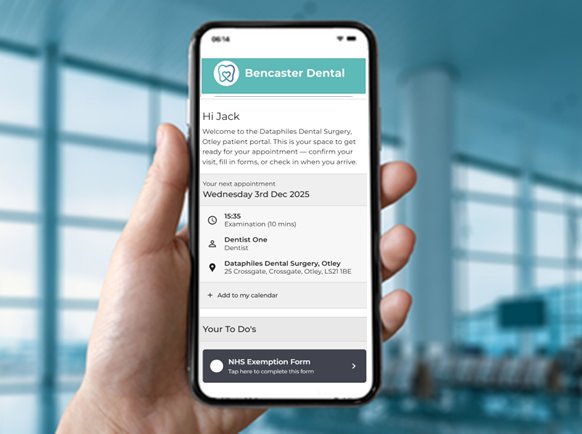
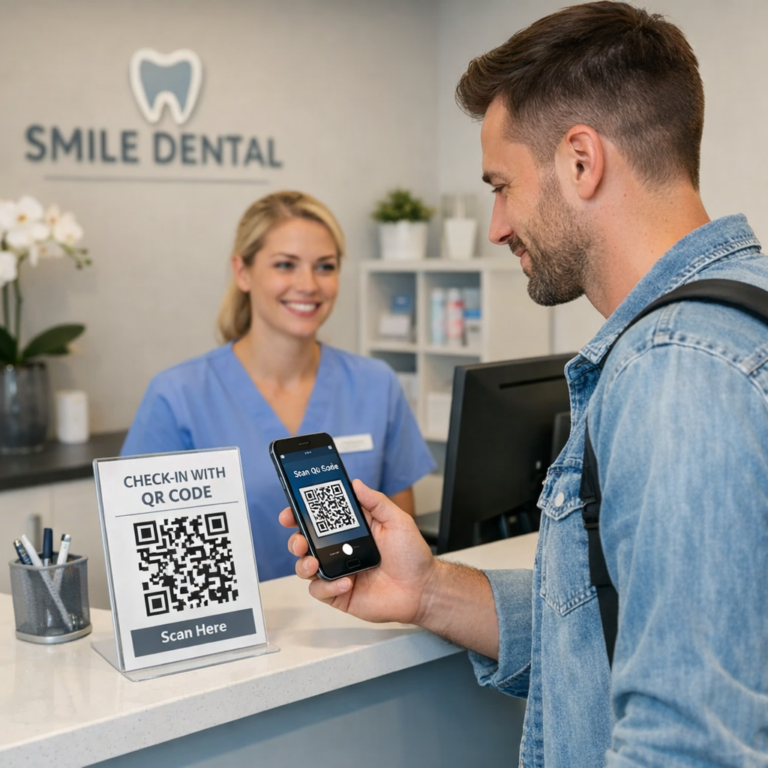
Online self-check in completes the patient journey by extending it into the practice itself. Through their own device or a practice screen, patients can confirm their arrival quickly and clearly. There is no need to queue simply to say they are here.
Once checked in, patients enter a Virtual Waiting Room where they can see that they are checked-in and staff can see on their end that the patient has arrived.
Everything before arrival works better when arrival is digital too. The process feels continuous rather than disjointed.
Creating a Calmer, Queue Free Reception
A digital arrival experience changes the atmosphere of reception spaces. Fewer queues mean less noise and less visible stress. Patients are not standing uncertainly at the desk, and staff are not constantly interrupted mid task.
Reception teams can oversee arrivals from a dashboard rather than acting as a manual gatekeeper. They step in when support is needed, not for every check in. This protects focus and helps staff maintain a calm, welcoming presence throughout the day.
For patients, particularly those who feel anxious about dental visits, a smooth arrival reduces tension immediately. Feeling acknowledged and informed replaces the uncertainty that often fuels stress.
Protecting Staff Time at the Busiest Moment
Arrival is when pressure peaks for reception teams. Phones ring, patients arrive simultaneously, and clinicians need updates. Patient self-check in through the patient portal removes one of the most repetitive tasks at this critical point in the day.
Instead of confirming names and appointment times repeatedly, staff can focus on accuracy, personal support, and exceptional service. Admin reduction here has an outsized impact because it happens at the most demanding moment of the workflow.
The result is not less human interaction but better-timed interaction.
Completing the Journey With Self-Check In
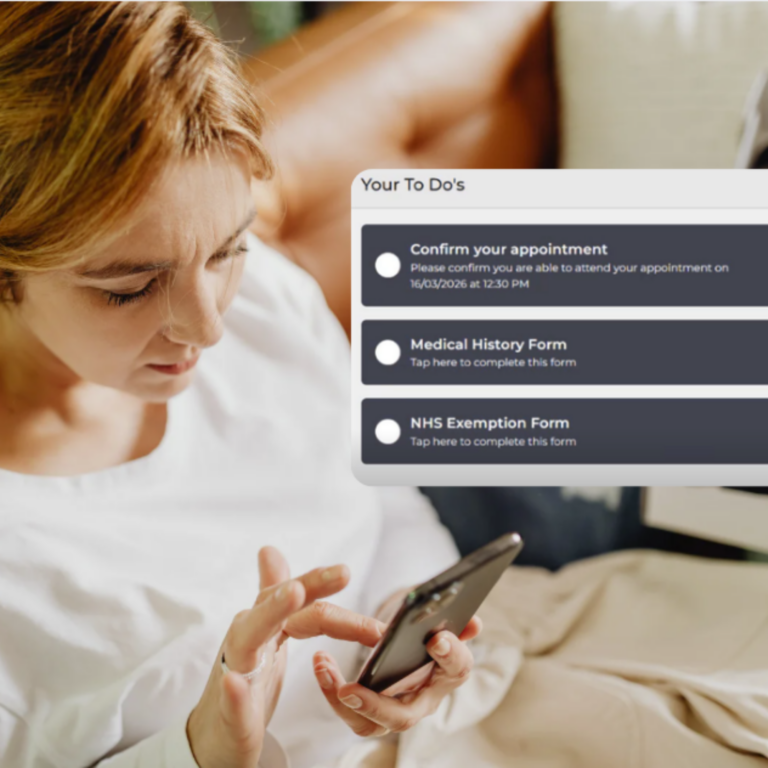
A unified digital journey is only complete when arrival is included. Digital booking, reminders and forms set patients up for success, but online check in ensures that success carries through the front door.
For practices looking to take this final step, self-check in represents a natural evolution rather than a radical change. It builds on tools already in place and delivers immediate benefits for both patients and staff.
To learn more about how digital arrival completes the patient experience, explore our pillar piece on One Portal, One Journey: How Patient Bridge is Unifying Patient Interactions.
If you are ready to extend your digital journey all the way through arrival, discover how Patient Bridge supports calm, queue free reception and a more resilient practice workflow.