From Interruptions to Insight: How a Unified Patient Portal Reduces Front Desk Pressure in Dental Practices
In a busy dental practice, the front desk is under constant pressure. Phone lines ring with appointment queries. Patients arrive early or late and want to know when they will be seen. Forms need checking, arrivals logged and messages passed to clinicians. Dental reception teams sit at the centre of patient experience while managing a high volume of interruptions throughout the day.
Improving practice efficiency in dentistry is not about removing people from the process. It is about protecting the time and focus of staff so they can deliver a calm, professional, and welcoming experience.
The Reality of Reception Workload in Dentistry
Dental receptionists spend a large part of their day answering routine questions. Is the dentist running on time? Where do I check in? Have you received my medical history form? Do I need to wait here? Individually, these are simple questions. Collectively, they create a fragmented workflow that makes even basic tasks harder to complete.
This constant switching impacts the wider dental healthcare workflow. Treatment schedules are harder to manage. Patient arrivals become more chaotic. Stress increases at the desk and mistakes are more likely. Reducing admin pressure is not about cutting corners. It is about removing unnecessary friction from the day.
Visibility Through a Patient Portal
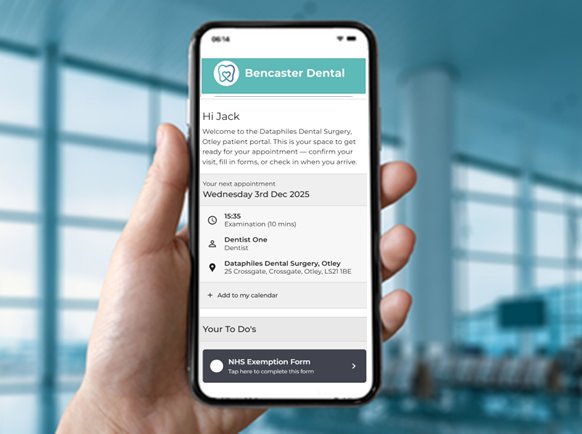
A unified patient portal gives dental patients visibility and control before they even arrive at the practice. Instead of relying on the front desk to guide every step, patients can see exactly what is expected of them and complete key tasks in their own time on their own device.
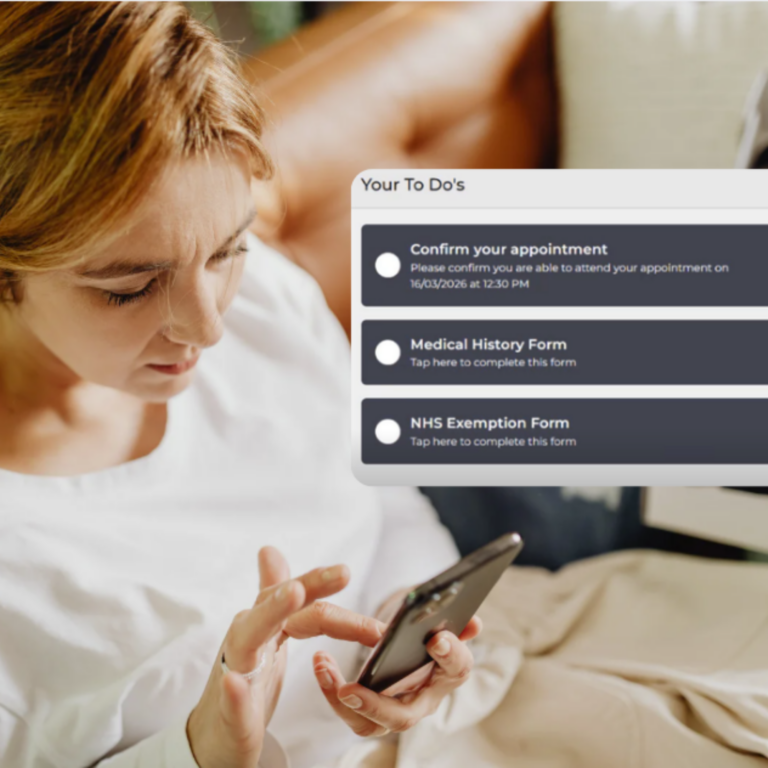
Before the appointment, patients can view a clear pre-appointment task list through the portal. This includes completing medical history updates, consent forms, or other required information. If a form has been completed before, it is pre-filled with previous answers, making updates quick and less repetitive. Patients arrive knowing everything is done, rather than worrying about paperwork at the desk.
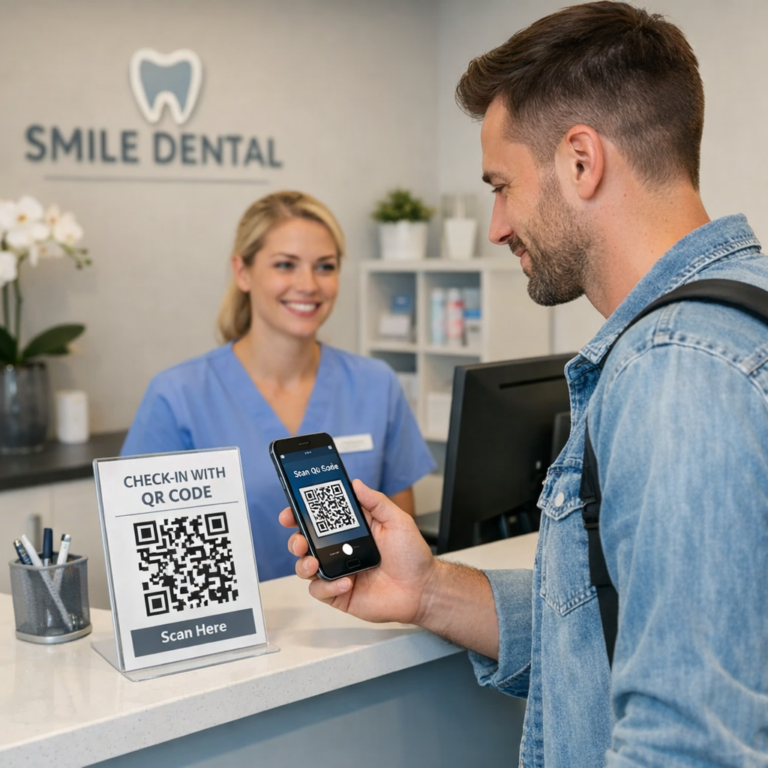
On arrival, patients can check in digitally using their phone, reducing queues and uncertainty in reception areas. Clear confirmation that they have arrived removes the need to ask for reassurance, while updates within the portal help manage expectations if appointments are running slightly behind.
This level of visibility plays an important role in reducing dental anxiety. Preparation replaces uncertainty. Patients feel informed, ready, and in control rather than rushed or unsure. For reception teams, this translates into fewer interruptions, less last-minute form chasing, and a calmer start to each appointment.
By shifting routine visibility and admin into the portal, the practice creates a smoother experience for patients and a more manageable workflow for staff. Reception teams are free to focus on personal support and complex needs, while the system quietly handles the predictable steps in the journey.
Fewer Routine Questions, More Focused Care
When appointment details, pre visit forms, practice information and post appointment guidance live in one place, patients no longer need to contact the practice for reassurance or clarification. A unified portal replaces scattered touchpoints with a single, consistent journey.
This drives real admin reduction within the dental practice. Receptionists are not re explaining the same information repeatedly. Data is not being entered twice. Messages are not lost between systems. Practice efficiency improves because everyone is working from accurate and up to date information.
Most importantly, staff can give more attention to patients who need personal support, whether that is due to complex treatment, accessibility requirements, or dental anxiety.
Protecting Time Without Losing the Human Touch
There is a concern in dentistry that digital tools might make practices feel impersonal. In reality, a unified patient journey has the opposite effect. By removing repetitive admin and predictable questions, staff gain time to be present and attentive.
Reception teams can focus on patient reassurance, clear communication, and smooth handovers to the clinical team. Dentists benefit from better prepared appointments and fewer last-minute disruptions. The human element becomes stronger because it is no longer buried under admin noise.
Unified journeys support staff rather than replacing them. They allow dental teams to work in a more controlled, less reactive way.
A Sustainable Approach to Dental Practice Efficiency
UK dental practices are managing increasing demand alongside staffing pressures and patient expectations. Improving the practice workflow requires systems that scale without increasing front desk strain.
A unified patient portal offers a practical route to sustained efficiency. By giving patients clarity and control, it reduces avoidable interruptions. By simplifying admin, it improves consistency and morale. Over time, this creates a calmer, more resilient practice environment.
To explore this further, read our pillar article on One Portal, One Journey: How Patient Bridge is Unifying Patient Interactions and how connected journeys better support both dental patients and practice teams.
Unified journeys do not remove the personal touch. They protect it.